
AI in Access Control Systems: Beyond the Basics
Access control has come a long way from simple physical keys and magnetic stripe cards. Today, **AI in access control systems** is transforming how we secure our physical and digital spaces. In my own work with high-security environments, I’ve seen how traditional systems often struggle with false positives and slow response times. AI doesn’t just add a layer of tech; it fundamentally changes the security posture from reactive to proactive.
This post covers the practical implementation of AI in modern access control, the technical hurdles of integration, and the critical role of data privacy in these systems.
The Evolution of AI in Access Control Systems
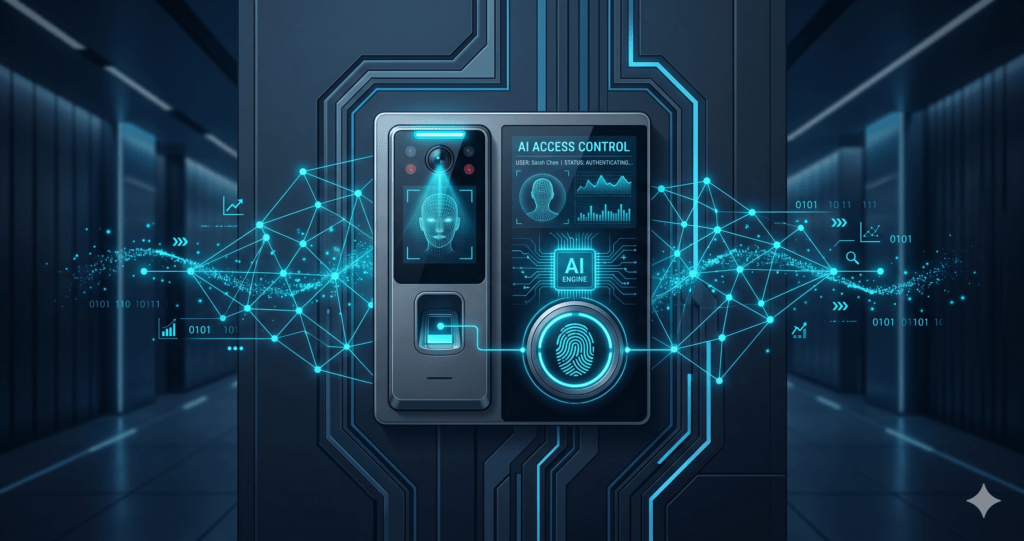
The shift toward **AI in access control systems** isn’t just about replacing a reader with a camera. It’s about the intelligence behind the device. Traditional systems rely on static “if-then” logic—if the card is valid, open the door. AI systems, however, learn from data patterns and can make real-time decisions based on complex variables.
1. Advanced Biometric Authentication
Traditional biometrics often failed due to environmental changes, poor lighting, or simple “spoofing” attempts. Modern AI-driven facial recognition uses 3D depth mapping and “liveness detection” to ensure the person at the door is actually a physical human, not a high-resolution photo or mask. This level of accuracy is a core benefit of using Safe AI Workflows to ensure system integrity and prevent unauthorized access.
2. Behavioral Anomaly Detection
AI doesn’t just look at who is entering, but how they are behaving. Machine learning algorithms can establish a baseline for normal user behavior. For instance, if a user typically enters at 9 AM through the main lobby but suddenly attempts access at 3 AM via a loading dock, the AI flags this as an anomaly. This proactive approach is a significant step beyond standard rule-based systems, allowing security teams to intervene before a potential breach occurs.
Overcoming the Integration Hurdle
One of the biggest gaps I’ve seen in current industry discussions is the “how-to” of integrating AI with legacy infrastructure. Many facilities aren’t ready to rip and replace their entire Wiegand-based wiring and expensive controller panels. The solution lies in a hybrid approach that bridges the gap between old-school hardware and modern intelligence provided by **AI in access control systems**.
Step 1: Implementing Edge Processing
To reduce latency and improve reliability, modern systems use edge-based AI. Instead of sending raw, bandwidth-heavy video streams to a central server or the cloud, the primary analysis happens at the reader level. This ensures that even if the connection to the central server is lost, the local door can still make secure, intelligent decisions using **AI in access control systems**.
# Example: Checking edge device connectivity and AI service status
ping -c 4 edge-reader-01.local
curl -X GET http://edge-reader-01.local/api/v1/health
This reduces bandwidth consumption significantly and ensures that access decisions are made in milliseconds, which is critical in high-traffic environments where any delay leads to user frustration.
Step 2: Bridging Legacy and Modern Protocols
Integrating legacy panels with cloud-based AI typically requires a hardware gateway. These devices translate local protocols (like OSDP or the older Wiegand) into modern REST APIs or MQTT messages. This architectural bridge is conceptually similar to how we Connect Gemini CLI to WordPress Using MCP to link disparate technological ecosystems into a unified workflow.
Data Protection and Privacy Compliance
With great data comes great responsibility. A major gap in many AI security implementations is a robust data protection policy tailored for **AI in access control systems**. According to the NIST AI Risk Management Framework, security systems must be both secure and fair to maintain public trust.
- Data Minimization: Only store the mathematical “hash” or vector representation of a biometric template, never the raw image. This ensures that even if the database is breached, the original biometric data cannot be reconstructed.
- Diversity in Training: Ensure your AI models are trained on diverse datasets to prevent algorithmic bias. This is particularly important in facial recognition to ensure equitable performance across different demographics.
- Regular Audits: AI models can “drift” over time. Much like we Optimized 40 WordPress Posts to Perfect SEO Scores, your access control audit logs and AI decision logs should be reviewed regularly for both security vulnerabilities and compliance with local privacy laws (like GDPR or CCPA).
Conclusion
Implementing **AI in access control systems** is no longer a luxury reserved for high-security government labs; it’s becoming the standard for modern facility management. By focusing on edge processing, smart integration with legacy hardware, and a “privacy-first” data policy, you can build a security infrastructure that is both more resilient and more respectful of user privacy.
The next step in your security journey might be looking at how to automate these alerts into your existing communication channels using tools like n8n or custom MCP servers. If you’re interested in how AI can further streamline your workflows, check out my guide on tracking YouTube tutorials with Obsidian.