
Bengali Pioneers of Indian Science: The 9 Architects of a Nation
The Bengali pioneers of Indian science led an extraordinary period of intellectual awakening. The late 19th and early 20th centuries were a time when visionary thinkers began a revolution—not just of ideas, but of institutions. These were the architects who built the laboratories, schools, and factories that would eventually form the backbone of modern Indian science and education.
In this post, we explore the lives and legacies of these nine Bengali pioneers of Indian science who moved beyond individual discovery to build lasting spaces for Indian genius to thrive.
1. Mahendralal Sircar: The Architect of Scientific Independence
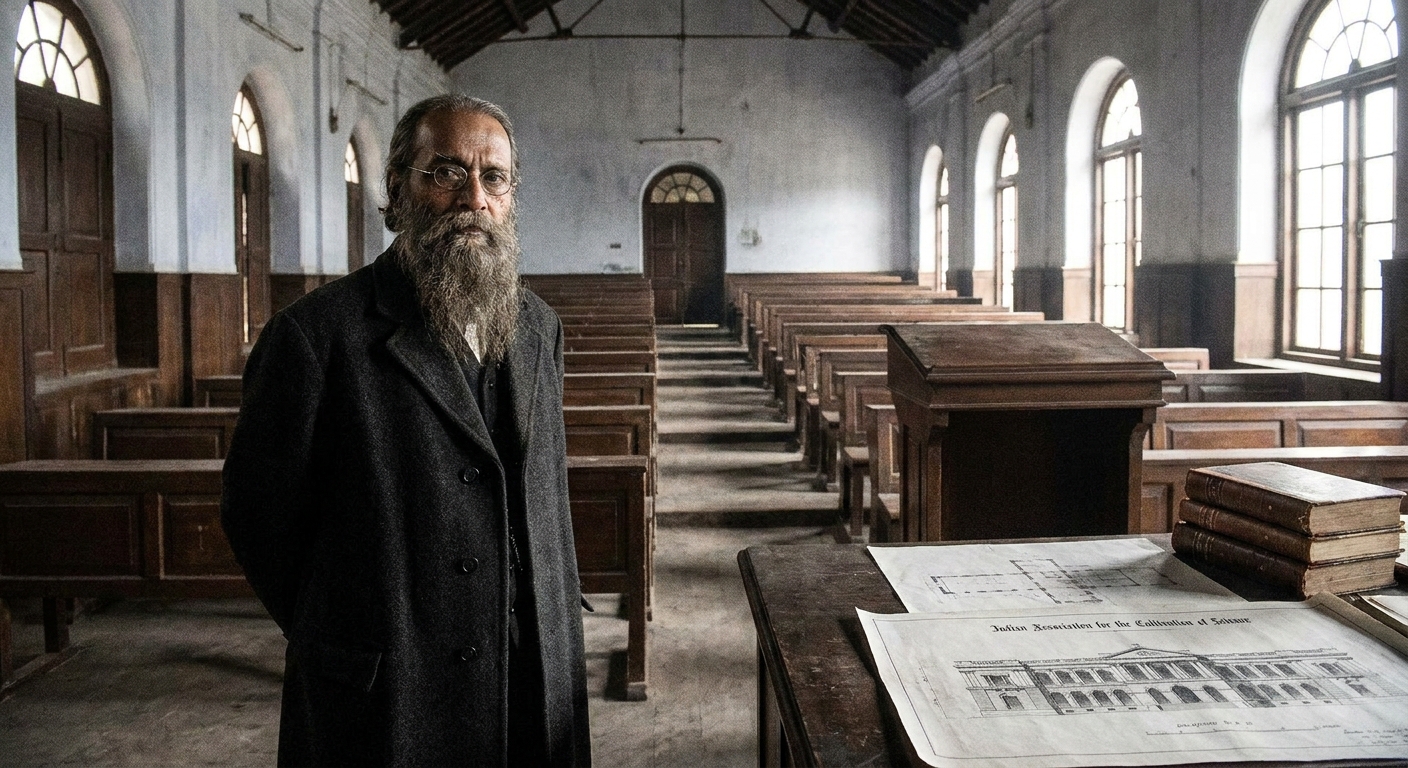
Before India had its own national laboratories, it had the Indian Association for the Cultivation of Science (IACS), founded in 1876 by Dr. Mahendralal Sircar. A physician by training, Sircar realized that for India to progress, it needed a space where Indians could conduct scientific research on their own terms, rather than as subordinates in colonial institutions.
The IACS became the cradle of Indian science. It was in these halls that C.V. Raman would later conduct his Nobel Prize-winning research. Sircar’s legacy is not just a building; it is the very idea of an autonomous Indian scientific community.
2. Kadambini Ganguly: Healing a Nation’s Women

In 1883, Kadambini Ganguly became one of the first two female graduates in the entire British Empire. But her ambition didn’t stop there. Facing immense social pressure, she earned her medical degree from Calcutta Medical College and traveled to Edinburgh and Glasgow for further training.
As the first Indian woman to practice modern medicine, she broke the “glass ceiling” of her era. Her work at Lady Dufferin Hospital and her advocacy for women’s rights paved the way for generations of Indian women to enter the medical profession and take charge of public health.
3. Acharya Prafulla Chandra Ray: The Fusion of Chemistry and Industry
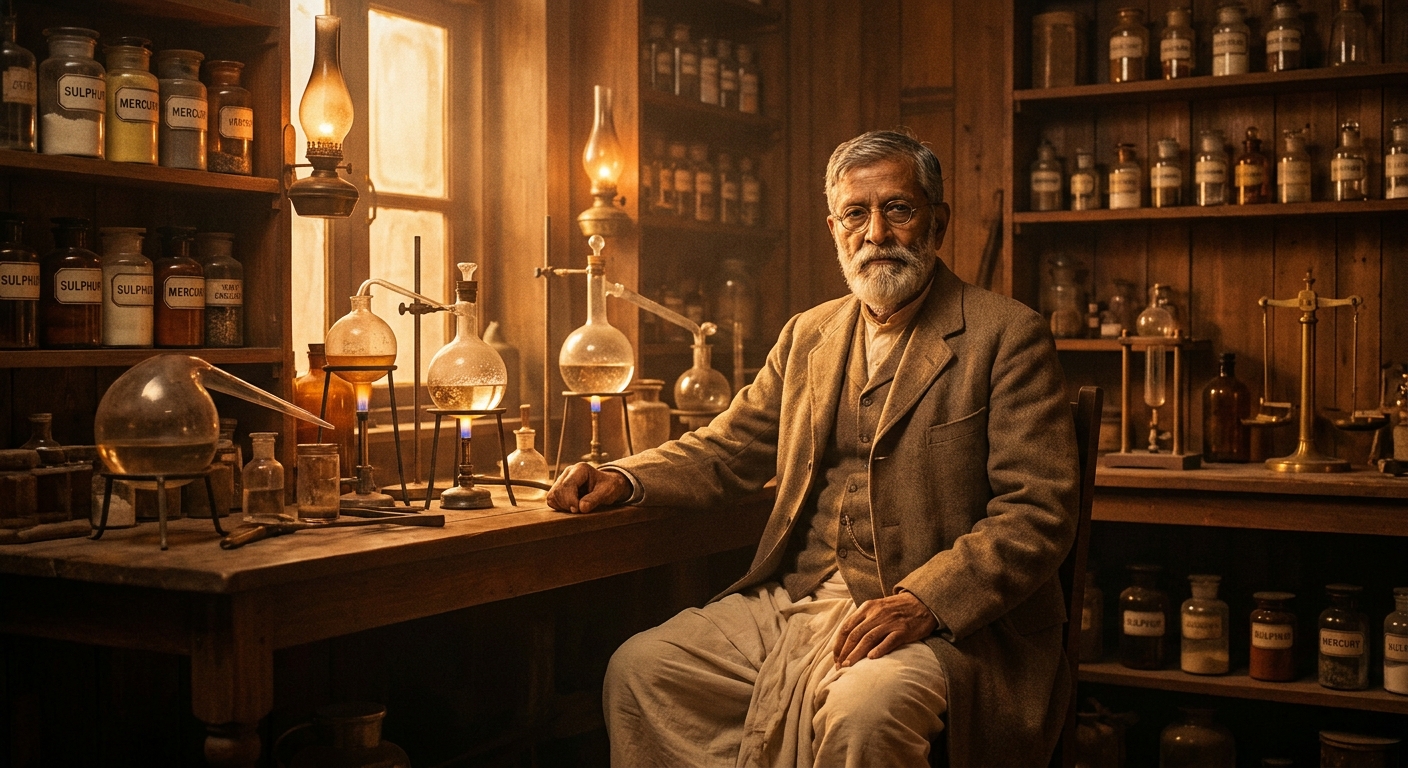
Known as the “Father of Indian Chemistry,” P.C. Ray was one of the most significant Bengali pioneers of Indian science. While he is celebrated for his discovery of mercurous nitrite in 1896, his true impact lay in his belief that scientific progress must lead to industrial self-reliance.
Ray founded Bengal Chemical & Pharmaceutical Works, India’s first modern pharmaceutical company. He turned his research into a factory, proving that Indian science could produce medicine and chemicals for its own people, effectively launching the Indian pharmaceutical industry.
4. Sir Jagadish Chandra Bose: The Voice of the Plants
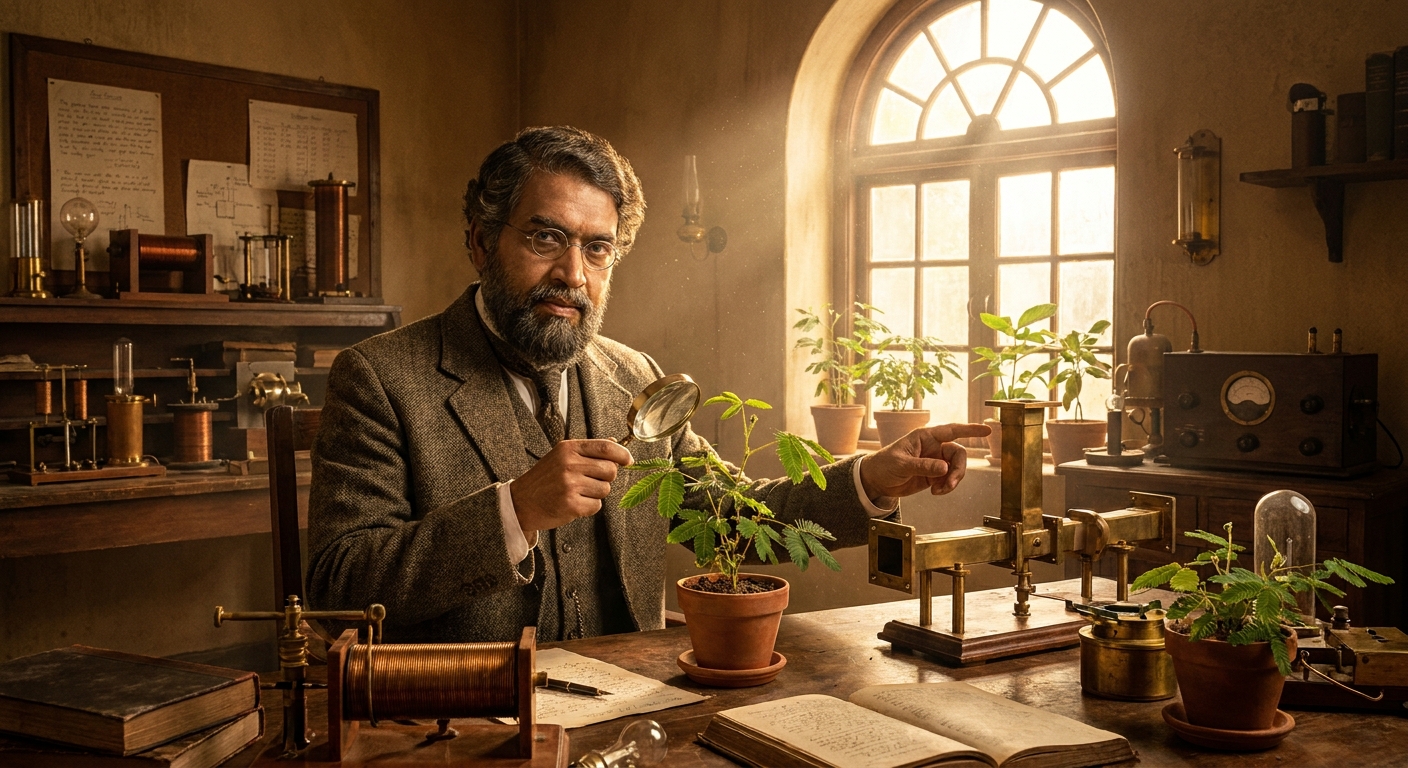
J.C. Bose was a polymath who refused to be confined by the boundaries of physics or biology. In the 1890s, he pioneered millimeter-wave radiation and early radio technology, predating Marconi’s work. Later, he turned his attention to plant physiology, inventing the Crescograph to prove that plants experience stimuli much like animals.
In 1917, he established the Bose Institute in Kolkata—India’s first modern research center for multidisciplinary science. Bose believed that science should be a public good, and his institute remains a center for cutting-edge research today.
5. Rabindranath Tagore: Education Beyond Borders

While known globally as a poet and the first non-European Nobel Laureate in Literature, Rabindranath Tagore was also a radical educator. He believed that the colonial education system was a “machine” that crushed the human spirit.
In response, he founded Visva-Bharati University in Santiniketan. His vision was to create a space where the “whole world meets in one nest,” combining Indian cultural traditions with international scholarship. Visva-Bharati reshaped the intellectual landscape of India, fostering artists, scientists, and world leaders.
6. Meghnad Saha: Mapping the Stars and Harnessing the Rivers
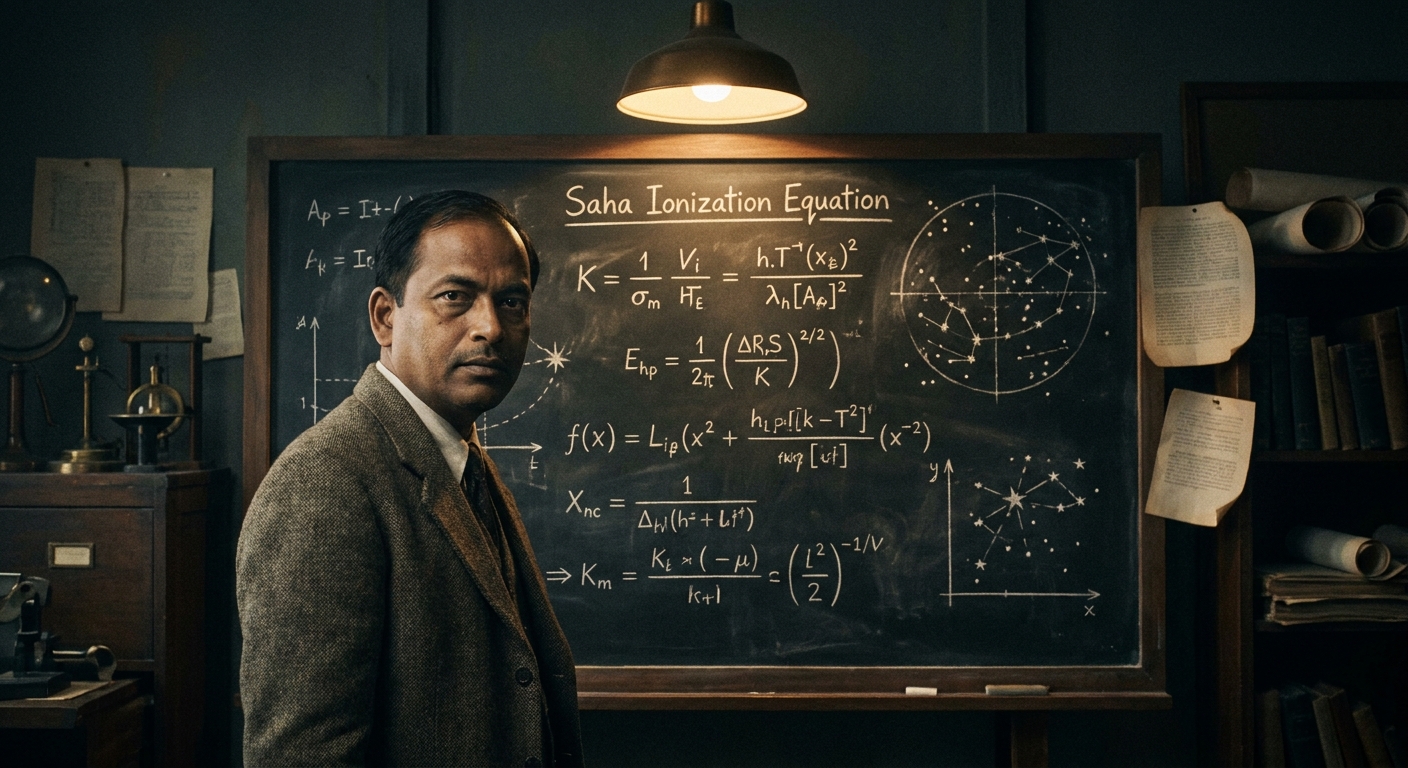
Meghnad Saha changed how we look at the universe. In 1920, he formulated the Saha Ionization Equation, which allows astronomers to determine the physical conditions (temperature and pressure) of stars from their light. This work effectively founded the field of stellar astrophysics.
But Saha was also a deep social thinker. He used his scientific mind to address India’s problems, advocating for river planning and flood control. His efforts led to the creation of the Damodar Valley Corporation, showing how “pure” science can be a tool for nation-building.
7. Satyendra Nath Bose: The Architect of the Quantum World
In 1924, a young physicist from Dhaka sent a paper to Albert Einstein. That paper introduced a new way of counting light particles, leading to the birth of Bose-Einstein Statistics. Today, a whole class of fundamental particles in the universe—the Bosons—is named in his honor.
S.N. Bose’s work is a pillar of modern quantum mechanics. His ability to revolutionize physics from a classroom in India proved that the Indian mind was ready to lead the world’s most advanced scientific frontiers.
8. Prasanta Chandra Mahalanobis: Measuring a Nation’s Progress
If S.N. Bose measured the quantum world, P.C. Mahalanobis measured the nation. Known as the “Father of Indian Statistics,” Mahalanobis founded the Indian Statistical Institute (ISI) in 1931.
He is famous for the “Mahalanobis Distance,” but his most tangible legacy was his role in India’s post-independence economic planning. He drafted the Second Five-Year Plan, which prioritized rapid industrialization and laid the groundwork for India’s modern economy.
9. Upendranath Brahmachari: The Lifesaver
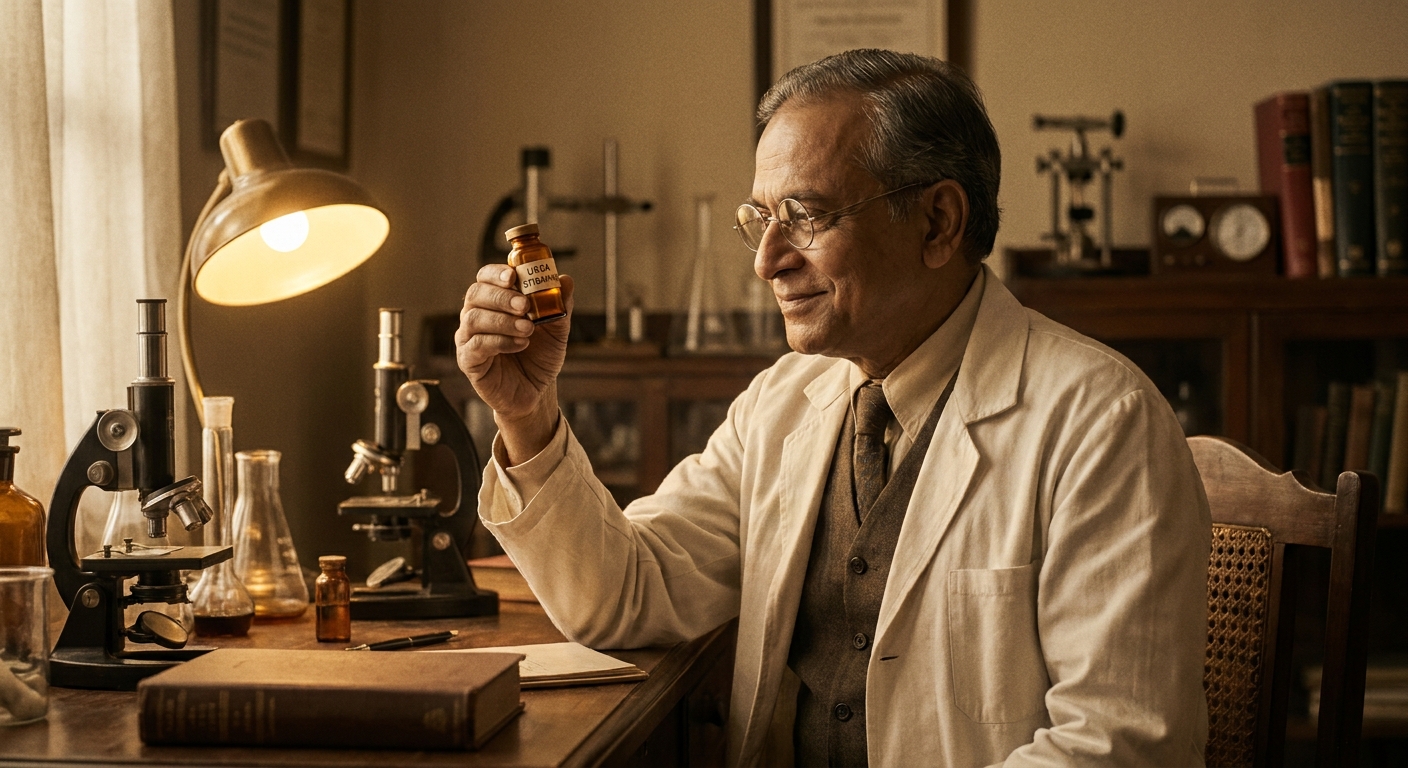
In the early 1900s, a disease called kala-azar was ravaging Bengal and Bihar, killing thousands. In 1922, Dr. Upendranath Brahmachari discovered Urea Stibamine, a powerful treatment that achieved high cure rates and saved countless lives.
Nominated for the Nobel Prize in Medicine, Brahmachari’s work remains a stellar example of Indian medical research solving a crisis that deeply affected the subcontinent. He proved that Indian doctors were not just practitioners, but world-class researchers.
Conclusion: A Legacy of Bricks and Brilliance
These nine Bengali pioneers of Indian science show us that progress is not just about individual eureka moments. It is about building the institutions that sustain those moments for future generations. From the labs of the IACS to the factories of Bengal Chemicals and the open-air classrooms of Santiniketan, these pioneers built the foundations of modern India.
Today, as India continues to rise as a global scientific power, it stands on the shoulders of these Bengali pioneers of Indian science who dreamed of a self-reliant, intellectual, and scientifically-driven nation.
Related Technical Guides
If you’re interested in the modern tools used to research and document this history, explore these guides on tskamath.com: