Beginner’s Guide to AI Blog Writing
Are you curious about how to use AI to write blog posts, but don’t know where to start? In this beginner’s guide to AI blog writing, we’ll explore what AI-assisted writing is, its benefits, and easy tips for jumping into your first AI-powered article—even if you’re new to the world of tech! Leveraging artificial intelligence can transform your writing process from a daunting task into a streamlined, creative journey.
What Is AI Blog Writing?
AI blog writing uses artificial intelligence tools or software to help generate, edit, or improve blog articles. These platforms use machine learning and Large Language Models (LLMs)—such as GPT-4, Claude, or Gemini—to understand your prompts, create content, check spelling and grammar, and even suggest formats or creative ideas. These models are built using deep learning architectures called Transformers, which allow them to process and generate human-like text by predicting the next most likely word in a sequence based on vast datasets of human writing.
This allows them to mimic styles and provide relevant information across almost any niche. With the latest advancements, AI writing is more accessible than ever, allowing anyone with an idea to produce high-quality written content in record time. It’s important to remember that while the technology is complex, using it is as simple as having a conversation with a digital assistant.

Benefits of Using AI for Blog Writing
- Efficiency: AI tools can draft content quickly, saving time on research and writing. What used to take hours of staring at a blank screen can now be accomplished in minutes, giving you a solid foundation to build upon.
- Creativity: AI can suggest fresh headlines, blog structures, and even clever introductions. It acts as a digital brainstorming partner, helping you overcome writer’s block and explore angles you might not have considered.
- Accessibility: Beginners can produce polished articles without being expert writers. You don’t need a degree in journalism to share your passion; AI helps refine your message and ensures clarity.
- Consistency: Helps maintain tone, grammar, and formatting throughout your blog. Consistent quality is key to building a loyal audience, and AI ensures every post meets a high standard.
- SEO Optimization: Many AI writing assistants can suggest keywords, optimize meta tags, and help structure your headers for better search engine visibility, making it easier for your target audience to find you.
Step-by-Step Guide: Getting Started with AI Blog Writing
- Choose Your AI Writing Tool: There are many platforms available (like ChatGPT, Jasper, or Copy.ai). Pick a user-friendly option if you’re new. Each tool has unique features, so try a few free trials to see which one fits your workflow best.
- Create an Outline or Prompt: AI performs best when given clear instructions—start with a simple outline or a prompt explaining your topic. The more specific you are about your target audience and the desired tone, the better the output will be.
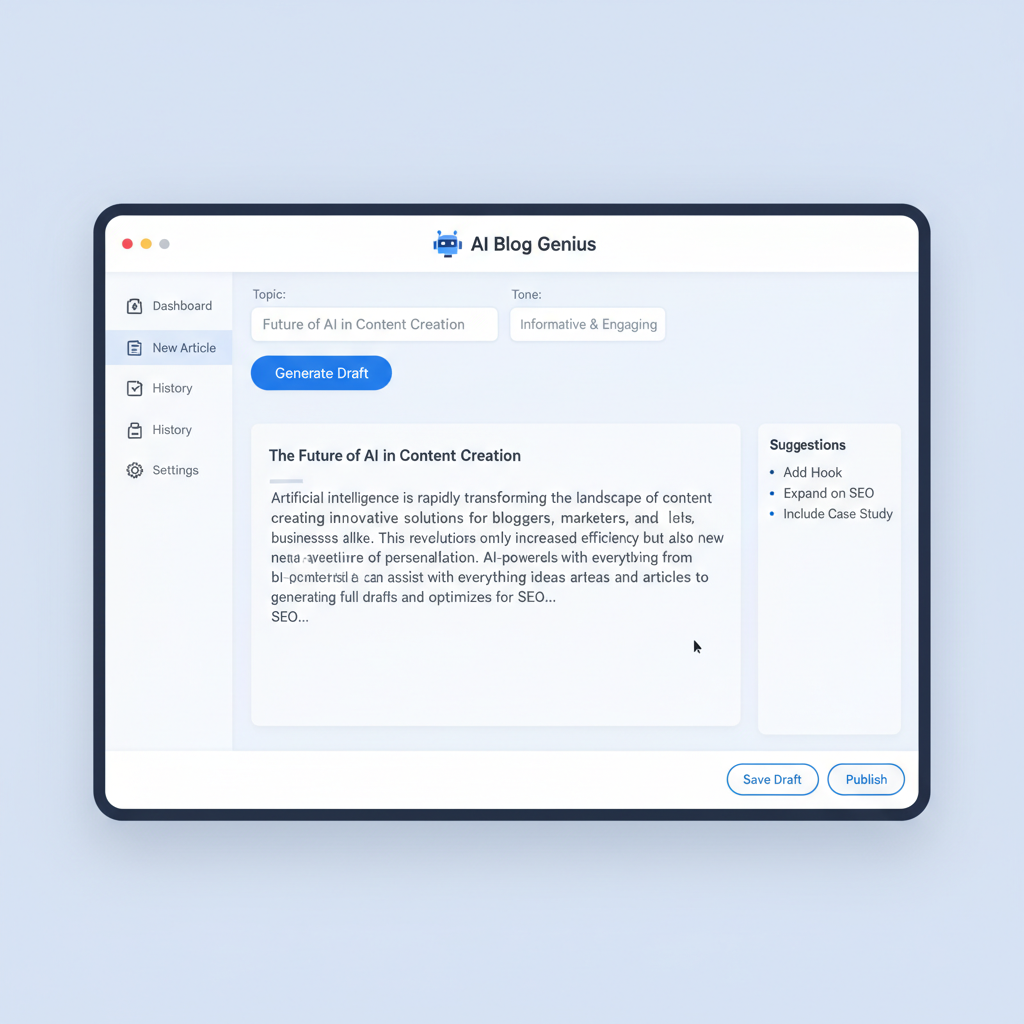
- Let AI Generate the First Draft: Use the tool to produce a draft. Don’t worry if it isn’t perfect—think of it as a starting point! It’s much easier to edit an existing draft than to write from scratch.
- Edit and Personalize: Review the draft, add your own ideas, personal stories, or expertise to make the post unique. This is where you add the “human” element that search engines and readers love.
- Check for Errors: Use built-in grammar and plagiarism checkers to polish your writing. While AI is smart, it can still make factual errors or generate repetitive sentences.
- Publish and Share: When you’re happy with the result, publish your blog and share it with friends or your online community. Engaging with your readers is the final and most rewarding step.
Common Mistakes to Avoid
While AI is a powerful ally, many beginners fall into predictable traps. Avoiding these common mistakes will ensure your blog remains high-quality and trustworthy.
- Over-reliance on AI: Many beginners make the mistake of “copy-pasting” directly from the AI. Always fact-check and personalize your posts. AI can generate hallucinations (false information) or bland content if you don’t add your own touch.
- Lack of Fact-Checking: AI models are not search engines and can occasionally state incorrect facts with high confidence. Always verify dates, names, and statistics from reliable sources. This is especially critical for technical or health-related topics.
- Generic Voice: Don’t let the tool replace your unique perspective. If your blog sounds like every other site, readers won’t have a reason to return. Always edit for personality and brand voice. Your personal anecdotes and unique insights are what build a community.
- Ignoring SEO: While AI can help with SEO, it’s important to manually check if your primary keywords are naturally integrated and that your meta descriptions are compelling.
- Neglecting Internal Linking: A common mistake is forgetting to link to your other relevant content. Internal links help search engines understand your site structure and keep readers engaged. For instance, staying informed about Writing Blog Trends in 2025 is essential for any modern creator.
- Ignoring the Target Audience: AI often produces broad content. If you don’t steer it toward your specific audience’s needs, the content will feel disconnected and fail to convert or engage.
Key Takeaways
- AI is a powerful assistant, not a total replacement for human creativity and oversight.
- The quality of your output depends heavily on the clarity of your prompts and outlines.
- Fact-checking and personalization are non-negotiable steps for high-quality blogging.
- Start small, experiment with different tools, and focus on delivering value to your readers.
Conclusion & Next Steps
AI blog writing is a fun and accessible way to grow your blog, even if you’re just starting out. It removes the technical barriers to entry and allows you to focus on your core message. Don’t be afraid to experiment—your unique ideas and voice are what make your blog truly great! If you have questions or want to share your first AI-written post, feel free to reach out via the contact page. Happy blogging!