
Watercolour Painting for Beginners: A Step-by-Step Guide to Relaxation & Creativity
Watercolour painting is a captivating and relaxing hobby, perfect for creative expression and unwinding after a busy day. Whether you’re a total beginner or rediscovering your love for art, this guide will walk you through everything you need to start your watercolour journey with confidence.
Essential Supplies for Watercolour Painting
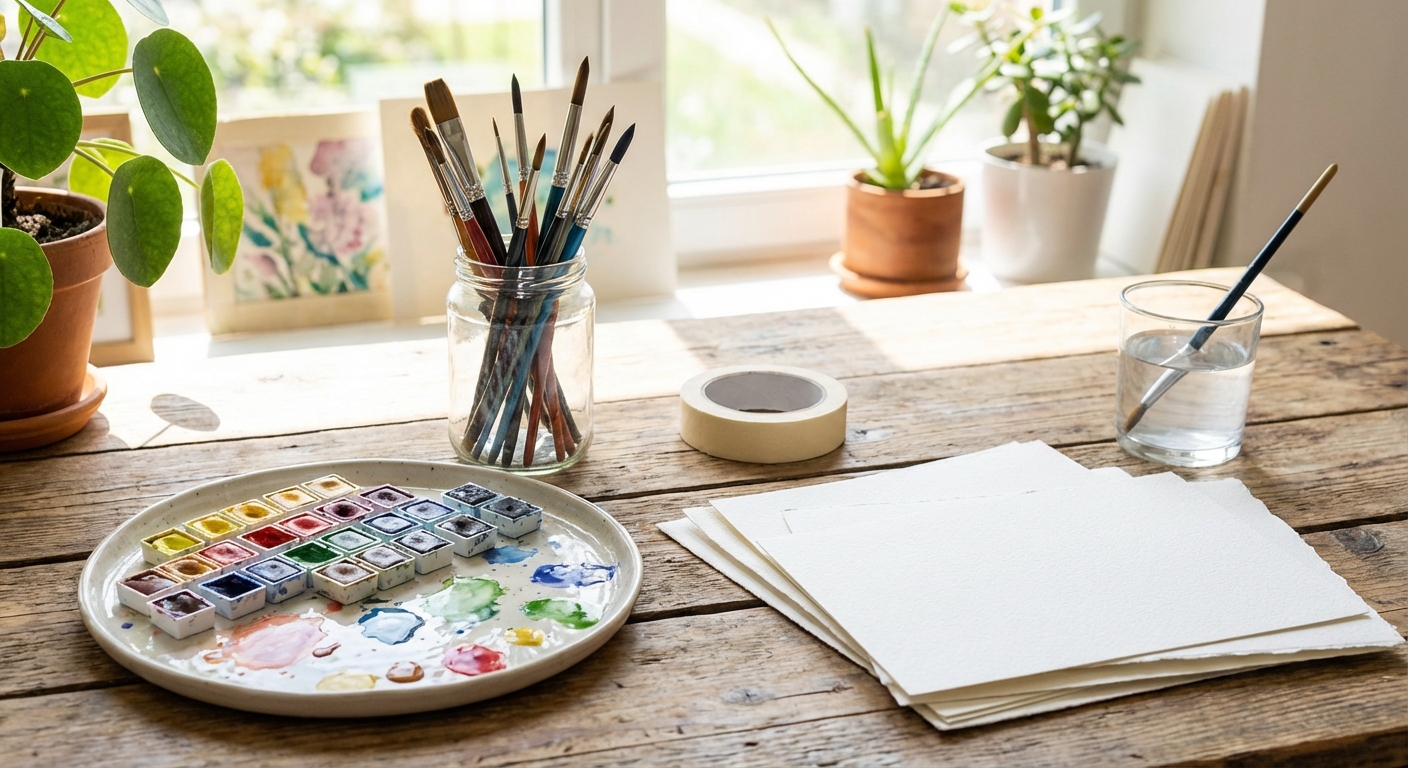
Getting started with watercolour painting doesn’t require a huge investment. At a minimum, you’ll need:
- Brushes: Invest in a small set of synthetic or natural brushes in a range of shapes (round, flat, or detail).
- Watercolour paints: Available in pans or tubes—pans are easier for beginners, while tubes offer more vibrant colors. Brusto
- Paper: Watercolour paper comes in various textures (hot-pressed for smooth; cold-pressed for textured) and thickness (at least 300 gsm is best for beginners).
- Optional extras: Palette for mixing colors, masking tape to secure your paper, and containers for clean water.
Setting Up Your Painting Workspace
Your workspace should be tidy, well-lit, and organized. Cover your desk with newspaper or a plastic sheet to prevent stains. Arrange your tools so everything is within easy reach—this setup makes the entire process far more enjoyable.
Basic Techniques Every Beginner Should Know
- Wet-on-wet: Moisten your paper and apply pigment for soft, blended effects.
- Wet-on-dry: Use wet paint on dry paper for sharper, more controlled lines.
- Color mixing: Combine primary colors to create vivid secondary and tertiary hues.
- Gradients & washes: Practice creating smooth transitions and beautiful sky backgrounds.
Step-by-Step Watercolour Painting Demo
1. Sketch the outline: Use a pencil to lightly outline your subject—simple shapes like leaves or clouds are great for your first painting.
2. First washes: Dilute your paint and cover large areas. Let each layer dry completely before adding more color.
3. Build up the color: Layer more paint for depth. Remember, patience is key to brilliant watercolours.
4. Add details: With a smaller brush and less water, add fine lines, highlights, or extra shading.
Common Mistakes and How to Avoid Them
- Overworking the paper: Too much scrubbing can damage the surface—use a gentle touch and let areas dry fully before correcting mistakes.
- Muddy colors: Limit mixing to two or three colors at once for fresh, vibrant results.
- Drying between layers: Always wait for previous layers to dry to prevent unwanted blending.
Inspiration & Next Steps
Start with simple subjects and gradually challenge yourself. Practice painting florals, landscapes, or household objects. Seek inspiration online or from nature—your creativity will grow with every attempt. For more inspiration on capturing nature’s beauty, check out our guide on Wildlife Photography in India as another creative outlet.
The Therapeutic Benefits of Watercolor
Beyond the final product, the act of watercolor painting itself is deeply restorative. Many artists use it as a form of “visual meditation.” Here is why watercolor is so effective for relaxation:
Embracing Imperfection: Watercolor is unique because of its fluidity. The water often goes where it wants, creating “blooms” and “backruns.” Learning to work with these unexpected moments teaches us to let go of perfectionism and embrace the beauty of the present moment.
The Flow State: When you focus on the pigment swirling in water or the rhythmic motion of the brush, you naturally enter a “flow state.” This immersion reduces cortisol levels and provides a much-needed break from the digital noise of daily life. It’s a sensory experience—the cool feel of the paper, the vibrant colors, and the quiet focus required.
Creative Problem Solving: Every painting presents a series of small, low-stakes puzzles. How much water should I add? Which color will balance this shadow? Engaging the brain in these creative decisions provides a sense of accomplishment and boosts mood.
Top 5 Tips for Beginner Success
If you are just starting out, keep these five pillars of success in mind to avoid frustration and see rapid improvement:
- 1. Don’t Skimp on Paper: You can use cheap student-grade paints, but cheap paper will frustrate you. Student-grade paper often doesn’t absorb water correctly, leading to muddy results. Invest in at least one pad of 300gsm cold-pressed paper.
- 2. Control Your Water: The most common beginner mistake is using too much water. Keep a paper towel in your non-dominant hand to “dab” your brush and control the moisture level before it touches the paper.
- 3. Work Light to Dark: Unlike oils or acrylics, you cannot easily paint a light color over a dark one in watercolor. Always start with your lightest washes and gradually build up to your darkest shadows.
- 4. Practice Color Mixing: Spend time just making “swatch sheets.” Mix every blue you have with every yellow to see the range of greens you can create. Understanding your palette is more important than having 50 different tubes of paint.
- 5. Paint for the Process: Don’t worry about creating a masterpiece every time. Some of your best learning will happen during “failed” paintings. Treat every sheet of paper as a playground for experimentation.
Conclusion
With a few supplies and some basic techniques, anyone can experience the joy of watercolour painting. Don’t hesitate to experiment and find your unique style! If you’re interested in more creative or hobby-related tutorials from Srikanth Kamath, explore the About Srikanth Kamath page and discover his expertise in technology, art, and more.